Vet-Approved Homemade Dog Food Recipes
Preparing balanced, veterinarian-informed meals at home gives you control over every ingredient that goes into your dog's bowl. Here's how to do it safely, consistently, and without becoming a professional chef.
🔒 Paiement sécurisé par Stripe
Why homemade dog food is worth considering
Most dogs eat the same ultra-processed kibble every day for years. While commercial foods are formulated to meet baseline nutritional standards, they rely on heavy processing, long shelf lives, and ingredient profiles designed for cost efficiency rather than optimal freshness.
Homemade dog food flips that equation. You choose the protein source. You control the vegetable variety. You see exactly what goes into the bowl — and you can adjust based on your dog's preferences, allergies, and energy levels.
The key is doing it with structure. Random table scraps won't deliver balanced nutrition. A vet-informed approach with clear recipes, portion guidance, and safe ingredient boundaries is what makes homemade feeding genuinely beneficial.
What balanced nutrition really means for dogs
Dogs need a mix of protein, healthy fats, carbohydrates, vitamins, and minerals — just like humans. But their proportions are different. A balanced homemade meal typically follows these general principles:
- ✓High-quality animal protein as the primary ingredient
- ✓Appropriate healthy fats for coat, skin, and joint support
- ✓Vegetables for fiber, vitamins, and antioxidants
- ✓A carbohydrate base for sustained energy (when appropriate)
- ✓Calcium and other minerals from natural or supplemented sources
- ✓Plenty of fresh water alongside every meal
Puppies, seniors, pregnant dogs, and breeds with specific needs may require adjusted ratios. This is why consulting a veterinarian before switching to homemade food is essential.
Safety first: ingredients to avoid
Not all human foods are safe for dogs. Some common kitchen ingredients can be toxic, and others can cause digestive distress or blockages. Here are the key ones to keep out of your dog's bowl:
- ✓Onions, garlic, and chives
- ✓Grapes and raisins
- ✓Chocolate and cocoa
- ✓Macadamia nuts
- ✓Xylitol (artificial sweetener)
- ✓Avocado
- ✓Cooked bones (splinter risk)
- ✓Excessive salt or seasoning
When in doubt, skip it. A simple, whole-food recipe with a short ingredient list is almost always safer than a complex mix of seasonings and additives.
How to transition from kibble to homemade
A sudden diet change can upset your dog's digestive system. Veterinarians typically recommend a gradual transition over 7 to 10 days:
- 1Days 1–2: 75% current food, 25% homemade
- 2Days 3–4: 50% current food, 50% homemade
- 3Days 5–6: 25% current food, 75% homemade
- 4Days 7–10: 100% homemade (or as advised by your vet)
Watch for signs of digestive discomfort — loose stool, vomiting, or loss of appetite — and slow the transition if needed. Keep a simple reaction log to track how your dog responds to new ingredients and recipes.
Portion guidance: how much homemade food to serve
Portion size depends on your dog's weight, age, activity level, and metabolism. As a general starting point, many vets suggest roughly 2–3% of a dog's body weight in fresh food per day, split into two meals.
General daily starting guidelines:
- • Small dogs (under 25 lbs): ~½ to 1 cup per day
- • Medium dogs (25–60 lbs): ~1 to 2½ cups per day
- • Large dogs (60+ lbs): ~2½ to 5 cups per day
These are rough estimates. Always confirm portions with your veterinarian, especially for growing puppies, seniors, or dogs with health conditions.
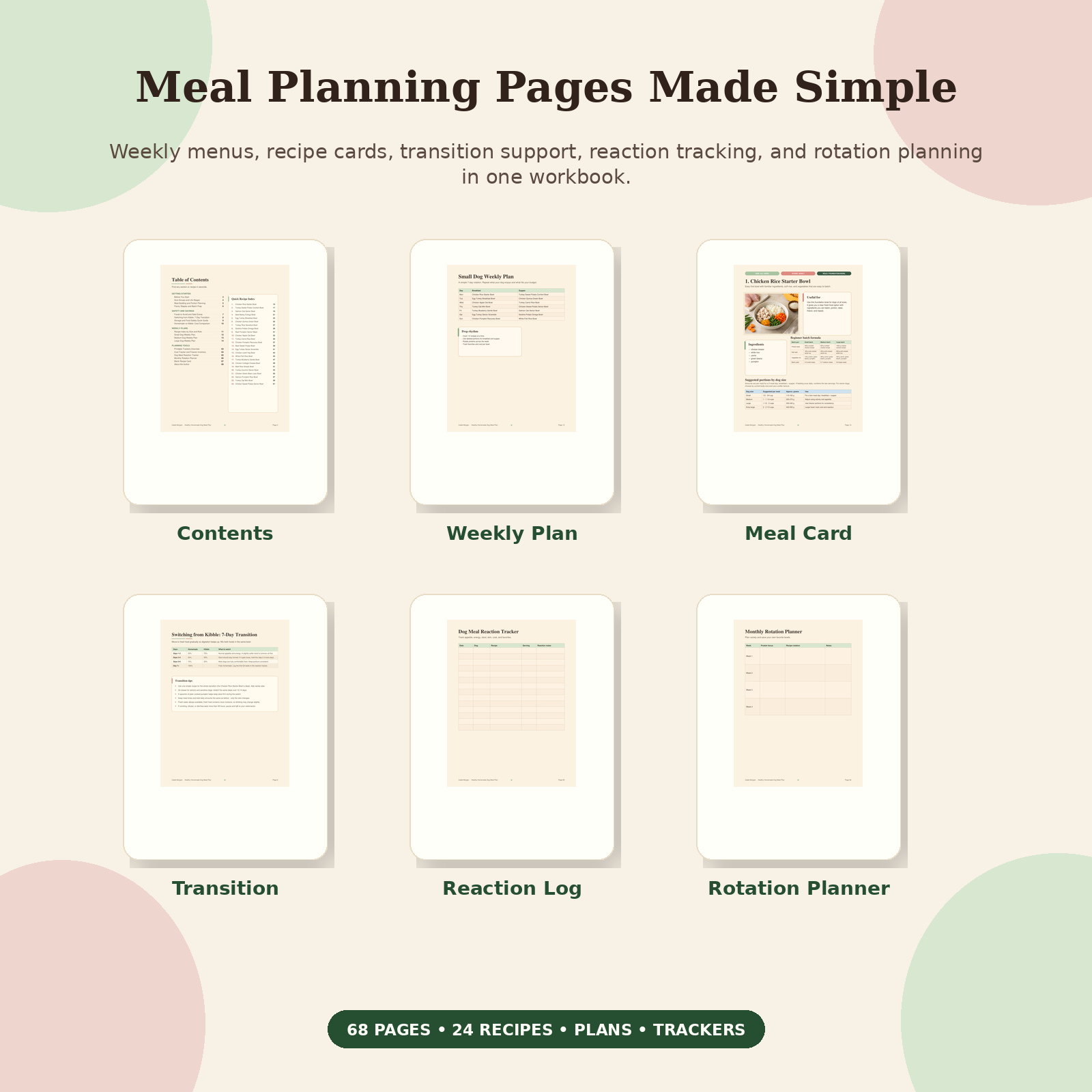
A structured meal plan with size-based weekly menus takes the guesswork out of portioning. That's exactly what the GoodBowl Meal Plan includes — recipes and portions tailored for small, medium, and large dogs.
A printable system for balanced homemade meals
GoodBowl was designed for dog owners who want the benefits of homemade food without the stress of figuring it all out from scratch. The guides include vet-informed recipe structures, portion guidance, and safe prep practices.
Frequently asked about homemade dog food
Is homemade dog food really better than commercial kibble?+
Homemade food gives you full control over ingredients, freshness, and variety. Many owners find their dogs have more energy, better coat quality, and improved digestion when switched to balanced homemade meals.
Do I need a veterinarian to approve my dog's homemade diet?+
It is strongly recommended to consult a veterinarian or veterinary nutritionist before switching to homemade food, especially for puppies, seniors, pregnant dogs, or dogs with medical conditions.
What ingredients should I avoid in homemade dog food?+
Avoid onions, garlic, grapes, raisins, chocolate, macadamia nuts, xylitol, avocado, and cooked bones. These can be toxic or dangerous for dogs.
How do I make sure my homemade dog food is nutritionally balanced?+
Use a vet-reviewed recipe with the right proportions of protein, vegetables, carbohydrates, and healthy fats. A structured meal plan with portion guidance and ingredient checklists makes balanced prep much easier.
Start building a balanced homemade routine today
The complete GoodBowl system — Meal Plan, Treat Recipe Book, and member portal access — gives you the structure to feed fresh with confidence.
🔒 Secure checkout powered by Stripe